
Why Do Hotel Prices Change? Rates Explained
Expand key insights ▾
- Rates move with demand, room count, and competitor pricing.
- Search timing can change what you see.
- Refundable rates give you room to reprice later.
- Always compare the total price, not the headline rate.
Table of Contents
- Why do hotel rates change daily or hourly?
- What makes one traveler see a different price than another?
- Do hotel prices go down closer to check-in?
- What should you compare before booking a moving rate?
- What time of day are hotel prices cheapest?
- Why does price keep jumping up on hotels?
- Do hotel prices go down the closer you get to the date?
- How do booking tools and revenue systems affect hotel pricing?
- Frequently Asked Questions
If you are asking why do hotel prices change, the short answer is that hotel rates are dynamic. They move with demand, remaining inventory, booking pace, event dates, and sometimes even what the market sees from other sellers. That means the same room can look different an hour later, especially when travel dates are popular or availability is tight.
The part most travelers miss is that the headline rate is only one piece of the decision. Taxes, fees, cancellation rules, and room type all matter. If you are trying to decide when to book, focus on the total price and the terms attached to it.

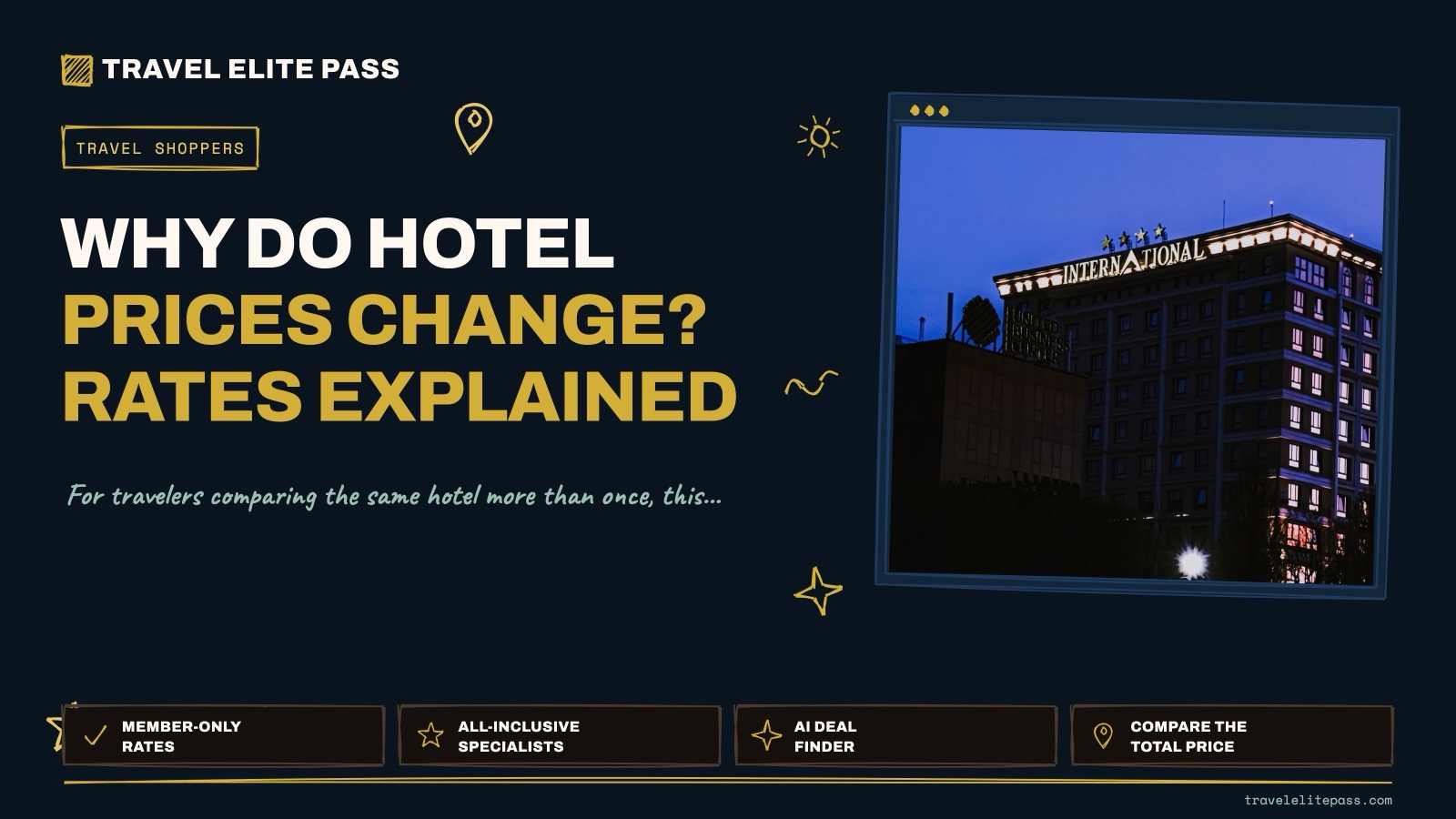
Multistory modern hotel with glowing carnice and light in windows located in city on street in night time Photo: Diana ✨ / Pexels
Why do hotel rates change daily or hourly?
Hotel prices change because inventory is fixed and demand is not. A hotel has a set number of rooms for a given night, so if more people start searching or booking, the rate can rise quickly. If demand softens, the rate can fall just as fast.
Published pricing guides say hotels and booking platforms adjust rates based on demand, season, day of week, local events, and how quickly rooms are selling. In practice, that means the price is less like a sticker and more like a live market quote.
- Booking pace: If rooms sell faster than expected, rates can rise.
- Season and day of week: Popular dates usually cost more.
- Local events: Conventions, concerts, and holidays can push rates up.
- Competition: Nearby hotels and sellers often react to each other.
This is why you can see a lower price in the morning and a higher one later the same day.
Is that random, or is there a pattern?
There is usually a pattern, but it is not simple enough to predict with one rule. A room may get cheaper near arrival if the property still has unsold inventory. The opposite can happen if demand surges or an event fills the market.
That is why a single search snapshot is useful, but not final.
What makes one traveler see a different price than another?
Two travelers can see different rates because the market may respond to browsing context, location, device, currency, or search history. Some pricing systems also adjust based on what the seller thinks the market will bear from a specific audience.
That does not mean every price difference is a trick. It usually means the site is trying to match supply and demand to the visitor it sees in front of it.
If you want a cleaner comparison, use the same device, same dates, same room type, and same cancellation terms. Then compare the all-in total price, not just the room rate.
Why does the price keep jumping up when I refresh?
If inventory is moving, a refresh can catch a new rate bucket. Some sites also update pricing more than once per day. When that happens, the number you saw a few minutes ago may no longer be available.
It feels frustrating, but it is often a sign that the room is being repriced live.
Also Read
Why One Search Changes EverythingDo hotel prices go down closer to check-in?
Sometimes yes, sometimes no. If a hotel still has empty rooms, it may drop rates near check-in to fill the gap. If the date is busy, prices can climb instead because the remaining inventory is scarcer.
The trade-off is real. Waiting can uncover a better rate, but it can also leave you with fewer room types, stricter cancellation terms, or no availability at all.
This is why refundable bookings matter. They give you a chance to reprice later without losing the original reservation if the market never moves your way.
Why Travel Prices Don't Wait goes deeper on timing, booking pace, and why the cheapest-looking moment is not always the best buy.
What should you compare before booking a moving rate?
Start with the total price, then compare the terms. A low headline rate can be misleading if taxes, fees, resort charges, or a nonrefundable rule make the final trip cost worse than a slightly higher option.
Then check whether the room is actually the same. A similar-looking listing may differ on bed type, view, occupancy, breakfast, or cancellation policy.
- Total price: Look at the full amount before checkout.
- Cancellation terms: Refundable rates are easier to reprice later.
- Room details: Match the bed, view, and occupancy.
- Booking channel: Compare the same room across sellers.
If you are comparing resorts or packages, a platform that searches multiple suppliers at once can make this faster. That is the basic idea behind Travel Elite Pass: one search, then a cleaner side-by-side view of the member rate and the public rate.
Why the cheapest room is not always the best buy
The cheapest room may be nonrefundable, may exclude extras, or may be a smaller category than it first appears. A better comparison is the full stay cost plus the flexibility you need.
That is especially true for all-inclusive resorts, where the rate structure can look simple until taxes, fees, or package terms show up.
| Compare | Why it matters | Best practice |
|---|---|---|
| Total price | Headline rate can hide taxes and fees | Look at the full amount before checkout |
| Cancellation terms | Refundable rates are easier to reprice | Check whether the rate is refundable |
| Room details | Similar-looking listings can differ | Match bed, view, and occupancy |
| Booking channel | Different sellers may show different rates | Compare the same room across sellers |
Wooden letter tiles forming the word 'inflation' on a rustic wooden surface, symbolizing economic themes. Photo: Markus Winkler / Pexels
What time of day are hotel prices cheapest?
There is no single cheapest hour that works every time. Hotel prices can move during the day, but they are not usually tied to a magic minute when rates always drop.
What matters more is whether the hotel has room inventory to sell, how close the stay is, and how many people are looking at the same dates. If demand is light, you may see a lower rate in the morning, afternoon, or late at night. If demand is strong, the rate can stay high all day or jump after a room is booked by someone else.
That is why people sometimes refresh a hotel page and see the price change right away. The system may be reacting to a booking, a search spike, or a shift in remaining room count. If you are trying to catch a better deal, check the same property more than once and compare different dates, not just different times of day.
A practical approach is to search when you are ready to book, then recheck later if your trip is flexible. You are looking for a window when the rate has softened, not a guaranteed low hour.
If you want someone to handle that watching for you, Travel Elite Pass can do the tracking and booking work after you understand how the pricing changes.
Also Read
Why Travel Prices Don't WaitWhy does price keep jumping up on hotels?
Because hotel pricing is live, a rate can jump when even a small part of the booking picture changes. One room gets sold, a group blocks inventory, a local event gets closer, or demand simply rises after more people start searching.
Hotels also often sell rooms in price tiers. Once the cheapest tier is gone, the next room price appears. That makes the increase feel sudden, but it is usually the result of the lower-priced inventory being used up.
Another reason is that the hotel is protecting remaining rooms for travelers who are willing to pay more later. This is common when the date is near, when occupancy is already high, or when the stay overlaps with a busy weekend. The rate can also change if the hotel adjusts its forecast during the day.
If you are seeing repeated jumps, stop assuming the site is broken. It is more likely that the hotel is recalculating based on supply and demand in real time. The best response is to compare the same room across a few booking moments, then decide whether the current number is acceptable for your dates.
For travelers who do not want to keep checking every few hours, a service like Travel Elite Pass can monitor the moving rate and help you book when it makes sense.
Do hotel prices go down the closer you get to the date?
Sometimes yes, but just as often no. Closer to check-in, hotels may lower rates if they still have many empty rooms. They may also keep prices high or raise them if demand is strong and inventory is getting tight.
So the real answer is that last-minute pricing depends on occupancy, the type of hotel, and the travel date. A city hotel for a quiet weekday may drop as the date approaches. A beach resort, convention hotel, or holiday weekend stay may do the opposite because the remaining rooms become more valuable.
That is why blanket advice like "book late" can be risky. The closer you get, the less choice you may have in room type, cancellation terms, and location. A lower rate is helpful only if the room still fits your trip.
If your dates are flexible, watch the price trend instead of guessing. If you need a specific hotel, consider booking when the rate is acceptable and checking whether a lower rate appears later. Some travelers prefer to secure the room first, then look for a better offer before the stay.
If you would rather not keep tabs on the rate yourself, Travel Elite Pass can take over that search and booking process for you.
How do booking tools and revenue systems affect hotel pricing?
Hotels and booking sellers often use revenue systems to adjust rates automatically. These systems look at demand, booking pace, competition, and availability, then recommend or publish a new price.
That is why rate changes can happen even when no human seems to be changing anything on the page. The system is reacting to the market in real time.
For travelers, the practical takeaway is simple: if you like a rate, do not assume it will still be there later. Save the booking conditions, then check whether a better total price appears before the deadline passes.