
Best All-Inclusive Resorts in the US: Complete Guide by Destination and Budget

True all-inclusive resorts in the US are rare — but they exist. The options that actually deliver the full Caribbean-style bundle (meals, alcohol, activities, entertainment) are Bolongo Bay in St. Thomas, Carina Bay in St. Croix, Dreams Puerto Rico in Guanica, and Club Med Sandpiper Bay in Florida. Everything else calling itself "all-inclusive" in the US usually means a meal plan, not the full package.
Expand key insights ▾
- There are only two true all-inclusive resorts in the entire US Virgin Islands — Bolongo Bay Beach Resort on St. Thomas (rates from $364/night) and Carina Bay Boutique All Inclusive Resort on St. Croix. Every other USVI property is a standard hotel or partial package.
- Puerto Rico's first true all-inclusive resort — Dreams Puerto Rico Resort & Spa in Guanica — only opened in 2018. Before that, the island had no full all-inclusive properties at all.
- Club Med Sandpiper Bay in Port St. Lucie, Florida is the only true all-inclusive resort in the continental United States — 216 acres, 337 rooms, full open bar, three dining venues, kids club, and sports academies including trapeze, tennis, and golf.
- US citizens do not need a passport for Puerto Rico or the US Virgin Islands — both are US territories where a government-issued photo ID is sufficient for travel.
- Hawaii has almost no true all-inclusive resorts — most Hawaii "all-inclusive" search results are standard hotels with meal plans, not the full bundle including alcohol and activities.
- Bolongo Bay in St. Thomas has been operating as an all-inclusive since 1989 — the longest-running all-inclusive program in the USVI and one of the few genuine ones in all US territories.
- For most US travelers, international all-inclusive options in Mexico and the Caribbean still offer significantly more choice, better value, and more competitive pricing — the no-passport advantage of US territories rarely offsets the price difference once flights are compared.
Table of Contents
- How few true all-inclusive resorts actually exist in the US
- US Virgin Islands: Bolongo Bay and Carina Bay — the only two real options
- Puerto Rico: Dreams Resort and what else is actually available
- Florida: Club Med Sandpiper Bay — the only mainland US option
- Hawaii: why all-inclusive barely exists here
- US vs. international all-inclusive: when domestic actually makes sense
- How to compare US all-inclusive resorts by real cost
- Frequently Asked Questions
The search for all-inclusive resorts in the US runs into a problem almost immediately: the term is used very loosely in the American hotel market. Most results that surface — whether in Hawaii, Florida, or the Carolinas — are standard hotels with meal packages, not the full all-inclusive experience travelers are expecting. Meals, unlimited drinks, activities, kids clubs, and entertainment bundled into one upfront price is a Caribbean concept that has only partially crossed over to the US domestic market.
The places where it genuinely exists — with actual verified properties — are the US Virgin Islands, Puerto Rico, and one property in Florida. This guide covers what is actually available, what it costs based on current rates, and when it makes sense to book domestically versus internationally.
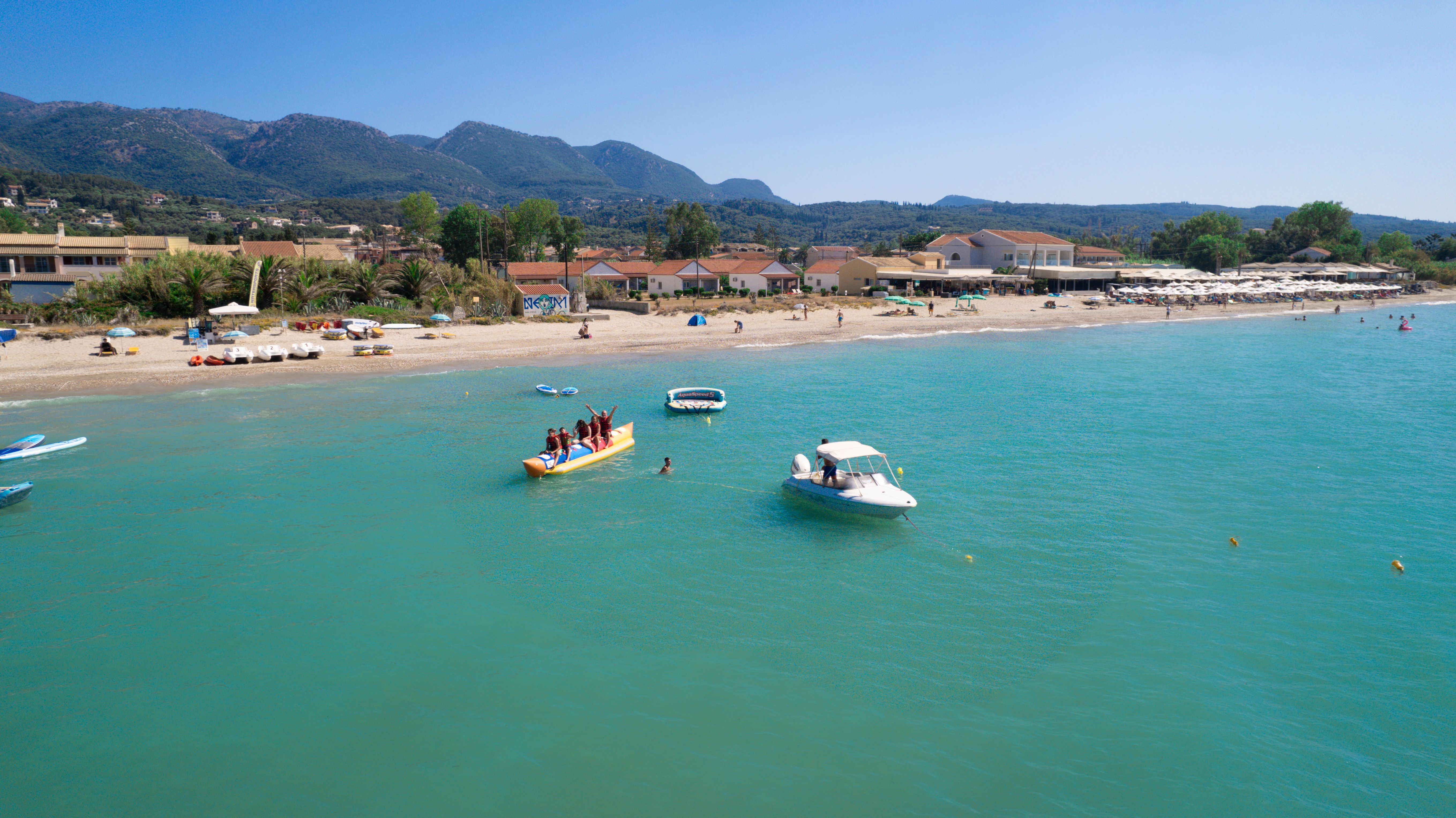
Bolongo Bay in St. Thomas — the only true all-inclusive on the island — has been running this model since 1989. Most other USVI properties are standard hotels or partial packages.
How few true all-inclusive resorts actually exist in the US
Across all 50 states and US territories, genuine all-inclusive resorts — where one price covers accommodation, all meals, all drinks including alcohol, activities, and entertainment — can be counted on one hand. Bolongo Bay Beach Resort on St. Thomas. Carina Bay Boutique All Inclusive Resort on St. Croix. Dreams Puerto Rico Resort & Spa in Guanica. Club Med Sandpiper Bay in Port St. Lucie, Florida. That is essentially the full list of properties that operate a true all-inclusive model comparable to what you would find in Cancun or Punta Cana.
Everything else using the "all-inclusive" label in the US is almost certainly a meal plan — breakfast and dinner included, or a daily food and beverage credit. That is a fundamentally different product. A hotel in Hawaii that includes breakfast is not an all-inclusive resort in the sense that Sandals Jamaica or Moon Palace Cancun is. The distinction matters because it changes what you actually spend at the property.
Before booking any US property described as all-inclusive, the check is simple: does the package include alcohol? Does it include activities? If those two questions do not have a clear yes in the booking details, it is a meal plan, not an all-inclusive.
Why the US market stayed mostly meal-plan while the Caribbean went all-inclusive
The Caribbean all-inclusive model grew because resorts were competing for international tourists who wanted price certainty in unfamiliar destinations. US domestic hotels never had that pressure — American travelers already had the infrastructure, transport, and familiarity to manage meals and activities à la carte. The all-inclusive model simply never became the norm stateside because there was no market demand driving it. The properties that do offer it — Club Med, Bolongo Bay — built that model deliberately, not as the default.
US Virgin Islands: Bolongo Bay and Carina Bay — the only two real options
Bolongo Bay Beach Resort on St. Thomas is the most interesting all-inclusive story in the US market. It is a family-run property — the Doumeng family has operated it since 1974 — and it has been running an all-inclusive program since 1989. It sits on a 1,000-foot crescent beach on the southern coast of St. Thomas, with beachfront rooms where the sand is literally outside the door. As of June 2026, all-inclusive rates at Bolongo Bay start at $364 per night. That is the starting point — rates vary by room type, season, and occupancy.
What makes Bolongo Bay worth knowing about is not just that it exists — it is that it has done this for over 35 years at a time when every other St. Thomas resort runs on a standard or partial-package model. It is a small, intimate property, not a 600-room mega-resort. The all-inclusive package includes meals, drinks, and water sports. For travelers specifically looking for a US-territory all-inclusive with a genuine beach and a no-passport requirement, it is the most direct option on St. Thomas.
Carina Bay Boutique All Inclusive Resort & Casino on St. Croix is the other true all-inclusive in the USVI. It is a smaller, more boutique property on the quieter, less-visited island of St. Croix. Getting to St. Croix requires either a direct flight (available from some US cities) or a connection through St. Thomas. For travelers who want something genuinely off the resort corridor, St. Croix and Carina Bay offer that — but the logistics are a step up in complexity compared to St. Thomas.
Every other resort in the USVI — including the Westin, the Ritz-Carlton, and the various Marriott properties — operates on a room-rate plus dining model. Properties like Secret Harbour Beach Resort in St. Thomas (currently showing around $573–614 per night) are frequently listed under all-inclusive searches but are not true all-inclusive properties. The room rate is the room rate; food, drinks, and most activities are separate.
Rates verified via Carib Journal and Travelocity as of 2026. Always confirm current package inclusions directly with the property before booking.
Puerto Rico: Dreams Resort and what else is actually available
Puerto Rico did not have a true all-inclusive resort until 2018, when AMResorts opened Dreams Puerto Rico Resort & Spa in Guanica — on the island's southwestern coast, about 20 minutes from the Guánica Dry Forest, a UNESCO-designated biosphere reserve. Dreams operates under the "Unlimited Luxury" model: unlimited à la carte dining with no reservations required, 24-hour room service, premium beverages, mini-bars refreshed daily, a kids club, teen zone, and full day and nighttime activities. This is the real all-inclusive product, not a meal plan.
The rest of Puerto Rico's resort market — La Concha Resort in San Juan (around $439–534/night), El Conquistador Resort in Fajardo (around $495–528/night), Hyatt Regency Grand Reserve in Rio Grande (around $333/night) — are all standard hotels. They are excellent properties, but they are not all-inclusive. What often shows up in searches as "Puerto Rico all-inclusive" is either the Dreams property specifically, or standard hotels being misclassified.
The practical situation for travelers: if you want a true all-inclusive in Puerto Rico, you are looking at Dreams Guanica specifically. Flights from the US East Coast to San Juan (SJU) run under 3 hours from most major cities — shorter than Cancun or Punta Cana from New York, Boston, or Philadelphia — and no passport is needed. For travelers who specifically cannot or do not want to travel internationally, Puerto Rico makes a legitimate case.
Florida: Club Med Sandpiper Bay — the only mainland US option
Club Med Sandpiper Bay in Port St. Lucie is the only true all-inclusive resort in the continental United States. It sits on 216 acres along the banks of the St. Lucie River, between Miami and Orlando, with 337 rooms across seven buildings. The all-inclusive package includes accommodation, all-day dining across multiple venues, full open bar with premium alcohol and non-alcoholic beverages, a wide range of activities and sports, and Club Med's structured children's programs. This is not a meal plan — it is the same full-bundle model Club Med runs at its Caribbean and European properties.
What makes Sandpiper Bay particularly distinctive for families is the sports academy program. Guests can receive professional coaching in tennis, golf, beach volleyball, and fitness — and the resort has a Flying Trapeze Academy, which offers instruction in actual circus trapeze. This is not a pool-and-buffet setup; it is an activity-focused property designed around sports. For families driving from the Southeast US — Georgia, the Carolinas, Alabama, Tennessee — the no-flight aspect eliminates a significant cost.
The limitation is that Sandpiper Bay is on a river, not an ocean beach. For travelers whose core expectation of an all-inclusive is a Caribbean beach, this is the fundamental mismatch — the resort cannot offer that, no matter how good the program is. It is the right choice for travelers who want the all-inclusive model within driving distance of the Southeast US, not for travelers who specifically want a beachfront tropical setting.
Club Med Sandpiper Bay in Florida is on a river, not an ocean beach — that distinction matters before booking if your expectation is a Caribbean-style beachfront setting.
Hawaii: why all-inclusive barely exists here
Hawaii all-inclusive vacation searches generate a lot of results, and almost none of them are actual all-inclusive resorts. Hawaii's hotel market is dominated by luxury brands — Four Seasons, Ritz-Carlton, Grand Hyatt, Westin — that have no interest in operating an all-inclusive model. These properties make significantly more revenue from à la carte dining, spa services, and activity bookings than they would from a fixed all-inclusive rate. The all-inclusive model simply does not fit the economics of Hawaii luxury hospitality.
What surfaces in Hawaii all-inclusive searches is usually one of three things: a vacation package (flight + hotel bundled by a booking site), a resort with a meal plan add-on, or standard hotels being filtered into all-inclusive search results incorrectly. If you find what looks like a Hawaii all-inclusive at a surprising price, read the inclusions carefully — you will almost certainly find that drinks, most activities, and entertainment are not included.
Hawaii is worth the trip for what it actually is — volcanic landscape, cultural history, surfing, hiking, and some of the most dramatic scenery in the US. But traveling there expecting a Caribbean-style all-inclusive experience will lead to disappointment. The product does not meaningfully exist there.
US vs. international all-inclusive: when domestic actually makes sense
The honest comparison: for most US travelers, international all-inclusive in Mexico or the Caribbean is more affordable, offers more property choices, and operates a more mature all-inclusive product than anything available domestically. That is not a close call — it is a significant difference in scale, competition, and price.
Domestic US all-inclusive makes clear sense in specific situations. If you do not have a current passport and cannot get one before travel — Puerto Rico and the USVI are the answer, and Dreams Guanica or Bolongo Bay are the genuine options. If you are a family in the Southeast US who can drive to Club Med Sandpiper Bay — eliminating flights for four people changes the total math enough to make Florida legitimate. If you are a West Coast traveler and Hawaii is your specific destination for the landscape — then the Hawaii hotel market, even without a true all-inclusive, is relevant.
Outside those specific situations, the no-passport argument tends not to survive a real price comparison. A family of four flying from New York to Cancun and staying at a mid-tier all-inclusive will almost always pay less total — for a better resort with more inclusions — than the same family in Puerto Rico or St. Thomas.
How to compare US all-inclusive resorts by real cost
The comparison has to start with inclusions, not price. Because the "all-inclusive" label in the US market is applied so inconsistently, two properties at similar nightly rates can include completely different things. Verify alcohol inclusion first. Then activities. Then entertainment. Then kids programming if relevant. Once you know what is actually included, the nightly rate becomes a meaningful number to compare.
After inclusions, run the total trip cost — resort rate for all nights plus flights for everyone plus transfers. For a family of four, the flight component is often the deciding factor. Bolongo Bay at $364/night is competitive on the resort rate — but flights from the US East Coast to St. Thomas add to the total in a way that changes the comparison against a Cancun or Punta Cana option where flights might be cheaper or shorter.
| Property | Location | Rates from | Passport needed | Key fact |
|---|---|---|---|---|
| Bolongo Bay Beach Resort | St. Thomas, USVI | $364/night | No | Only true all-inclusive on St. Thomas, family-run since 1974 |
| Carina Bay Boutique All Inclusive | St. Croix, USVI | Varies | No | One of only two USVI all-inclusives; boutique scale |
| Dreams Puerto Rico Resort & Spa | Guanica, Puerto Rico | Varies | No | Puerto Rico's first (and only) true all-inclusive; opened 2018 |
| Club Med Sandpiper Bay | Port St. Lucie, Florida | Varies | No | Only true all-inclusive in continental US; river setting, not ocean |
Rates as reported in 2026 sources. Verify current rates directly with each property.