
Best All-Inclusive Family Vacations: How to Compare Resorts and Actually Save

All-inclusive family vacations are not all priced the same way. Kids' ages, room occupancy rules, and what counts as "included" vary significantly by resort — and those differences can change your total by hundreds of dollars per trip. The cheapest headline rate is rarely the cheapest family booking once you factor in kids' meals, activity fees, and room-type restrictions.
Expand key insights ▾
- Most all-inclusive resorts define "children stay free" differently — age cutoffs range from 2 to 17, and some cap the number of free kids per room.
- A kids' club, water park, or babysitting service is not always included in the base package — these are common upsells even at "family-friendly" resorts.
- Connecting rooms and family suites are priced differently from standard doubles — the room type, not just the resort, determines the real per-person cost.
- The Caribbean offers the highest concentration of genuinely kid-friendly all-inclusive resorts, but Mexico (Cancun, Riviera Maya) generally offers lower per-night costs for the same inclusions.
- Booking shoulder season (May–June or late October–November) can cut family all-inclusive costs by 30–40% versus peak summer or spring break weeks.
- Always compare the per-person total — not the per-room headline rate — when evaluating family packages. A room sleeping four at $400/night is $100 per person; a room at $200/night sleeping two is the same rate but half the space.
- Adults-only resorts are almost always cheaper per night — if your kids are older teens, a resort with flexible age policies can unlock better pricing than strictly family-branded properties.
Table of Contents
- What actually makes a resort genuinely family-friendly?
- How to compare all-inclusive family resorts by real cost
- Best destinations for all-inclusive family vacations
- What age group changes all-inclusive pricing the most?
- What is typically not included at family all-inclusive resorts?
- When is the cheapest time to book a family all-inclusive?
- Cancun vs Punta Cana for families: which is actually cheaper?
- Are there all-inclusive family resorts in the US?
- How to find cheap all-inclusive family vacation packages
- Frequently Asked Questions
All-inclusive family vacations look simple from the outside — one price, everything included, no surprises. But the "everything" is where families get caught off guard. Two resorts can quote a similar nightly rate while including completely different things: one covers kids' meals, a supervised club, and all non-motorized water sports; another charges separately for all three. That gap does not show up until checkout or, worse, at the resort itself. If you are comparing family-friendly all-inclusive resorts, the work is not finding the lowest rate — it is understanding what that rate actually contains.
This guide covers what to compare, which destinations offer the best value by family type, and how to find a real deal versus a marketing headline.
The pool is included — but the cabana rental, the waterslide wristband, and the swim-up bar tab often are not. Know the difference before you arrive. Photo: Pexels
"Family-friendly" is a marketing label, not a standard
Every all-inclusive resort with a waterslide calls itself family-friendly. That label tells you almost nothing useful. What actually matters for a family is a specific list of operational details: the age cutoff for free kids, whether there is a dedicated supervised kids' club (and its hours), the dining options for picky eaters, whether the beach or pool area has shallow sections, and how the resort handles teenagers who do not want to be treated like children.
Genuinely kid-friendly all-inclusive resorts typically offer at least three things that separate them from resorts that just tolerate children: a staffed kids' club with age-grouped programming (not just a babysitting corner), at least one dining venue with a dedicated children's menu at every meal period, and a main pool area with a separate shallow section so younger children can swim independently. Resorts like Beaches in the Caribbean and Moon Palace in Cancun are consistently cited as benchmarks for this reason — they were designed for families, not retrofitted to accommodate them.
The practical test before booking: find the resort's kids' club page and check whether it lists a daily schedule, age brackets, and staff-to-child ratios. If that information is buried or missing, assume the program is minimal.
Note: Resort programs, inclusions, and age policies change frequently. Always verify directly with the property before booking.
The "children stay free" trap
Age cutoffs vary more than most people expect. One resort may count anyone under 12 as a free child; another sets the limit at 6. Some cap the free-child benefit at one child per booking, so a family of five with three kids pays full price for the third. Always verify the exact age cutoff and the number of children allowed under the free-stay policy before using that as a pricing assumption.
How to compare all-inclusive family resorts by real cost
The right comparison unit for a family is the per-person per-night total — not the per-room rate. A suite that sleeps six at $600 per night is $100 per person. Two standard rooms at $250 per night each is $500 total, but $125 per person if each sleeps four. Run both numbers before you pick a room category, because the headline rate hides which is actually cheaper for your family size.
After you have the per-person number, add the items most likely to cost extra: airport transfers (often $30–80 per person round trip), travel insurance, gratuities if not included, and any activity package for specialty excursions. Some resorts charge separately for scuba, deep-sea fishing, or off-site tours even under an all-inclusive label. Others include unlimited excursions in the package. That difference alone can change the real trip cost by $200–400 per family.
| What to check | Why it changes the real cost | What to watch for |
|---|---|---|
| Kids' free age cutoff | A 13-year-old charged as an adult doubles the teen's share | Cutoffs range from 6 to 17 by property |
| Room type vs. family size | Per-person cost swings based on how many share the room | Max occupancy per room type |
| Kids' club hours and age groups | Evening programming determines whether parents get dinner alone | Daily schedule, age brackets, staff ratios |
| Meal plan scope | Specialty restaurants may require reservations or surcharges | A la carte vs. buffet-only access |
| Activity inclusions | Water sports, excursions, and park passes add $50–200 per person | What is "motorized" vs. "non-motorized" |
| Transfers and gratuities | A family of 4 round-trip from Cancun airport: $120–280 | Whether tips are included or expected |
| Final per-person per-night total | The only number that lets you compare fairly across resorts | Never compare per-room rates across different family sizes |
Best destinations for all-inclusive family vacations
The right destination depends on what your family actually needs, not what sounds most exotic. Here is an honest breakdown by what each major all-inclusive destination does well for families:
Cancun and Riviera Maya, Mexico — Best value for most families
Mexico offers the highest concentration of large, genuinely family-oriented all-inclusive resorts at the most accessible price points from the US. Cancun's Hotel Zone has direct flights from most major US cities, and family all-inclusive rates tend to run 15–25% lower than comparable Caribbean options for the same inclusions. The trade-off is crowds during peak season and a strip-mall feel in the hotel zone itself. Families prioritizing value over atmosphere typically land here.
Punta Cana, Dominican Republic — Best for beach-first families
Punta Cana has some of the best shallow-water beaches in the Caribbean, which makes it genuinely easier for families with young children. The airport is purpose-built for resort arrivals, and most major all-inclusive properties are within 20–40 minutes. Pricing is comparable to Mexico, and the resort density means competition keeps rates lower than smaller islands. Families looking for calm water, white sand, and full resort infrastructure at reasonable prices tend to rate Punta Cana well.
Jamaica — Best for teens and adventure-focused families
Jamaica's topography — hills, rivers, waterfalls, and coral reefs — gives families more to do than a pool and a beach. Sandals has expanded its Beaches brand to Jamaica specifically for families. The downside is cost: Jamaica all-inclusive rates run higher than Mexico or Dominican Republic for comparable room categories, and transfers from Montego Bay to Negril can take 90 minutes. It is best suited to families who will actually use the excursion options and are willing to pay for that range.
Aruba — Best for families with mixed-age groups or repeat travelers
Aruba sits outside the hurricane belt, which removes the weather risk that affects most Caribbean destinations from June to November. It is one of the few islands where families can book summer travel with reasonable confidence. Aruba's all-inclusive resorts are fewer in number, which means less competition and higher rates — but the consistency of weather makes it worth the premium for families with narrow travel windows.
What age group changes all-inclusive pricing the most?
Teenagers are the most expensive age group at all-inclusive resorts, and they are the group most families underestimate at booking time. A child who was free at 11 may be charged as a full adult at 13 depending on the property. Teens also tend to consume more — restaurant visits, activity add-ons, late-night bar (mocktail) access — which can drive up incidental charges at checkout.
Young children (under 6) are the most affordable age group because most resorts include them free and they require the least in the way of programmed activities. The 6–12 range varies: some resorts charge a reduced kids' rate, others count them as free. The key question for this group is whether the kids' club covers their age bracket — many clubs split into "mini" (3–7) and "junior" (8–12) programs, and some only run during peak hours, not full days.
For families with teens specifically: resorts that have dedicated teen programming — not just a shared lounge — tend to cost more but justify it because teens who are engaged are not pulling parents away from their own time. Moon Palace Cancun and Atlantis Bahamas are frequently cited for teen programs that run independently from the main kids' club.
Resort offerings and programs are subject to change. Confirm current teen programming directly with the property before booking.
What is typically not included at family all-inclusive resorts?
The word "all-inclusive" is not regulated, so every resort draws the line differently. The items below are the most common exclusions families discover after arrival — and knowing them in advance prevents the kind of frustration that turns a good trip into a complaints conversation.
Motorized water sports. Jet skis, parasailing, and speedboat rides are almost universally excluded from all-inclusive packages, even at resorts that include kayaking, paddleboarding, and snorkeling gear. Budget $50–150 per person per session if your family plans to use these.
Spa and wellness services. These are nearly always excluded and can add $80–200 per treatment. The "welcome spa credit" some packages advertise is typically $50 per stay — barely enough for one service.
Specialty dining surcharges. Many all-inclusive resorts operate some à la carte restaurants with a cover charge of $15–50 per person. The buffet and main dining room are always included; the sushi restaurant or steakhouse may not be.
Off-site excursions. Cenote tours, zip-lining, ruins visits, and snorkeling trips to off-property sites are not included in the base package at any resort we are aware of. Budget $60–150 per person per excursion.
Room service after hours. Some resorts include 24-hour room service in the package; many charge delivery fees or limit free service to specific hours.
Premium alcohol brands. Standard all-inclusive packages cover house brands. Premium spirits and imported wines are typically charged separately, even when the local version is free.
When is the cheapest time to book a family all-inclusive?
For most all-inclusive destinations, the price calendar follows school-year logic more than weather logic. The most expensive weeks are US school holidays: spring break (mid-March to mid-April), summer (late June through August), Thanksgiving week, and the Christmas–New Year window. During these periods, family demand peaks and resorts hold or raise rates with little negotiation room.
The cheapest windows for family travel are the shoulder periods that fall just outside those peaks. May (after spring break, before summer rates kick in) and late October through mid-November (after summer, before Thanksgiving) consistently offer the lowest all-inclusive rates of the year — typically 30–40% below peak summer pricing for the same room. Weather is generally still favorable in both Mexico and the Caribbean during May, though late October carries a small hurricane risk for some destinations.
How far in advance to book matters too. All-inclusive resorts for families often sell their best room categories 4–6 months out. Connecting rooms and overwater bungalows with family configurations go first. If you wait until 6–8 weeks before travel, you are booking what is left — often higher-priced room categories or dates with limited inventory. The exception is last-minute deals for families flexible on destination and date, which can appear 2–3 weeks out when resorts have unsold rooms to fill.
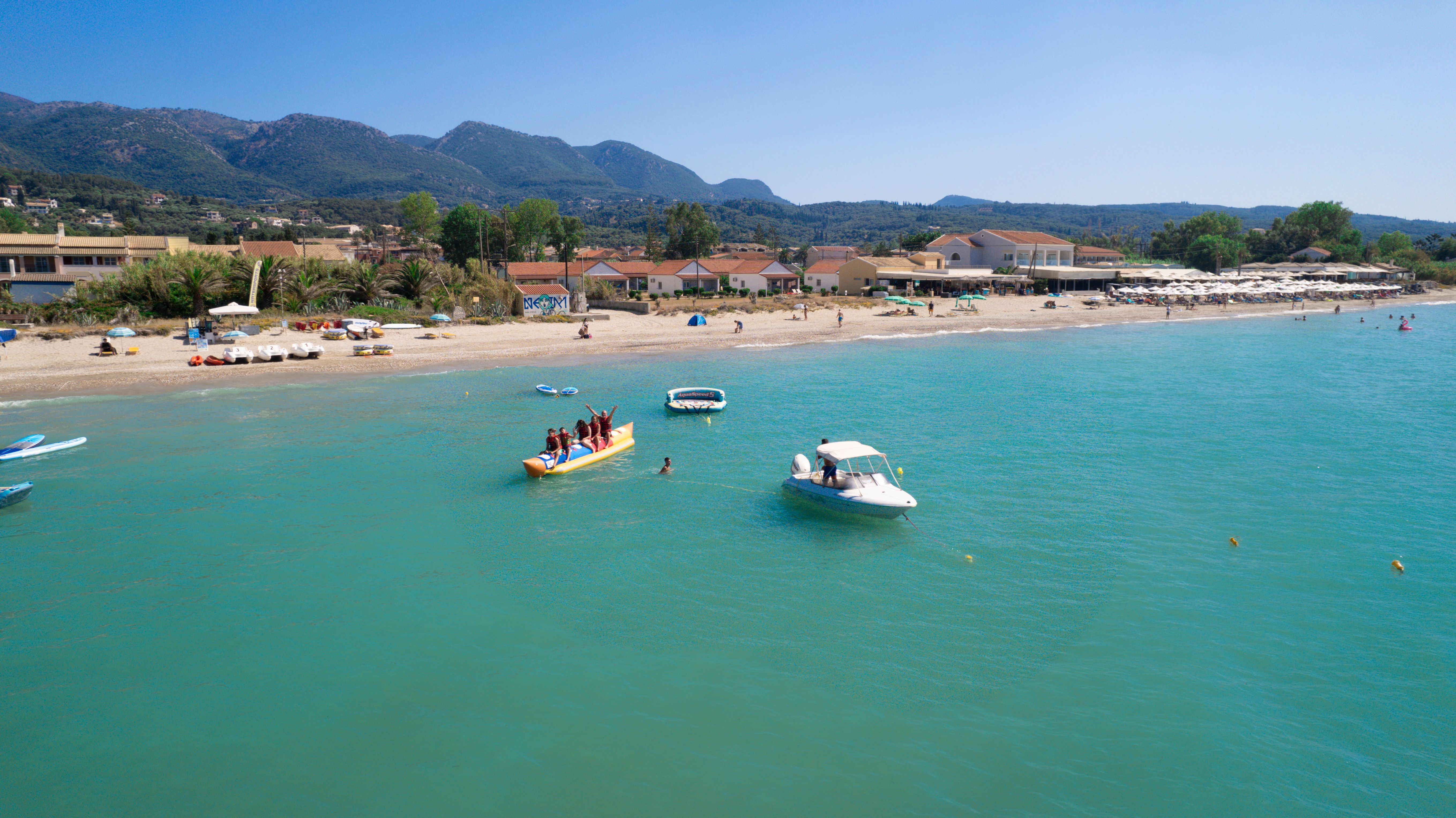
Peak summer pricing for a family of four can be 30–40% higher than the same resort in May or late October — same beach, same pool, different bill. Photo: Pexels
Cancun vs Punta Cana for families: which is actually cheaper?
On raw per-night rates, Cancun and Punta Cana are comparable for family all-inclusive bookings in most seasons — but the differences in what you pay beyond the base rate can shift the real total significantly.
Cancun's advantage is flight access. It receives more direct routes from more US cities than any other Caribbean-adjacent destination, which typically means cheaper and shorter flights. A family flying from Chicago or Atlanta will almost always pay less to reach Cancun than Punta Cana — and that flight cost, multiplied by four people, can easily offset a slightly higher resort rate.
Punta Cana's advantage is beach quality. The Dominican Republic's east coast has calmer, shallower water than most of Cancun's Hotel Zone — better for families with young children who need calm surf. If your priority is beach time over excursions, Punta Cana usually wins on experience for families with kids under 10.
The honest answer: neither is universally cheaper. Run the full-trip total — flight cost per person, resort per person per night, transfers, and any planned excursions — before picking a destination. The winner varies by departure city, travel dates, and family size.
Are there all-inclusive family resorts in the US?
Yes, but the US all-inclusive market is smaller and more expensive than its international counterpart. A handful of genuine all-inclusive family properties operate in the US, mostly in Hawaii, Colorado, and Florida. Club Med Sandpiper Bay in Florida is one of the most frequently cited US all-inclusive options for families. Rancho La Puerta and several dude ranch properties in the Southwest offer all-inclusive stays that include meals, activities, and lodging — though at a significantly higher per-night rate than Mexico or the Caribbean.
Hawaii is the most common domestic comparison point. Several Maui and Kauai resorts offer packages that function like all-inclusive stays, but true all-inclusive pricing in Hawaii typically costs 60–80% more per person per night than comparable Mexico or Caribbean options. The trade-off is that no international flight is required for US citizens, and some families prefer the certainty of domestic travel.
For most families comparing costs honestly, the math does not favor US all-inclusives unless passport logistics, flight anxiety, or a very specific experience type makes the price premium worth it. If your family is open to Mexico or the Caribbean — which offer the strongest value for all-inclusive family packages — that is where most of the inventory, competition, and genuine pricing advantage sits.
How to find cheap all-inclusive family vacation packages
The cheapest all-inclusive family packages are not found by searching for "cheap." They are found by removing the constraints that drive the price up: fixed peak dates, brand loyalty to a single chain, and the assumption that more expensive always means more included.
Flex on dates by even 3–4 days. Rates can drop 20–30% by shifting from a Saturday arrival (peak checkout pattern) to a Tuesday or Wednesday. Many booking tools let you view a rate calendar — use it before committing to specific dates.
Bundle flight and hotel together. Package pricing — where the resort and flight are purchased together — consistently comes in lower than booking both separately. This is because tour operators buy inventory in bulk and pass partial savings through the bundle. The savings range from $100 to $400 per booking depending on destination and travel dates.
Compare room categories before comparing resorts. A family of four in a junior suite at a mid-tier resort may cost less per person than the same family in two standard rooms at a budget resort. Resort pricing is not linear by room type — premium room categories are sometimes underpriced relative to their occupancy capacity.
Use member-only rates. Several booking platforms offer trade-level pricing that sits below the public rate. These member rates function similarly to wholesale pricing — the platform buys inventory at a lower cost and passes some of that through to members. The key is to compare the all-in total at member pricing, not just the advertised headline, to verify the savings are real before booking.
If you want to see how member pricing compares against public rates for family all-inclusive stays, Travel Elite Pass is built for that comparison.