

MEXICO VACATION PLANNERS
Decide whether a second resort adds enough to your vacation to justify the move, separate booking terms, and interruption to your stay.
Mexico resort vacation packages can look more appealing when you divide the trip between different hotels: a simpler stay followed by an all-inclusive finish, or different resort settings within the same vacation. But a second confirmation does not automatically create a coordinated itinerary.
Start with the stay you would book if you never moved: one Cabo base for your full vacation. Then measure what the split adds and what it interrupts. The useful comparison includes meals you will actually use, separately confirmed nights, room-access gaps, and the effort of packing and settling in again.
What should the second resort add to your trip?
The strongest reason to split is a change in how you want to spend your vacation. You might want independent dining during one part and meals on property during another. A different hotel name or room view is a weaker reason if your daily routine stays the same.
Cabo deserves a specific test here. Its Pacific waves and limited choice of swimming beaches make ocean access a separate decision from choosing an attractive beachfront setting. If swimming is the reason for moving, verify the actual beach conditions and permitted access at each property rather than assuming the second beachfront resort solves it.
Keep the downside of one base in view, too: you commit to one room, meal plan, and resort environment for the entire stay. If those choices fit only part of your vacation, avoiding a move may mean accepting a daily mismatch.
Separate an essential need from a preference
A room arrangement that does not work for your party is an essential problem. Wanting different decor is a preference. Solve essentials in the initial shortlist; do not use a split stay to postpone a problem that will affect every night of the first reservation.
A useful test is to finish this sentence: "Moving lets me do something I would otherwise miss." If the answer is vague, compare a better-fitting single-base option before adding another stay.
| Stay structure | When it makes sense | Main trade-off |
|---|---|---|
| One Cabo base | You want a consistent room and routine throughout the vacation | Less opportunity to change the resort environment |
| Room-only stay followed by all-inclusive | You want independent meals first and on-property dining later | Meal budgeting changes, and the move interrupts the trip |
| Different all-inclusive resorts | Each property supplies a specific experience you intend to use | You repeat arrival logistics and may lose usable resort time |
Compare complete quotes, not attractive nightly rates
The financial comparison starts with equivalent trips. Use the same travelers, total nights, room needs, and travel dates for the single-base quote and the proposed split. Otherwise, a lower total may simply reflect a shorter stay or a different room arrangement.
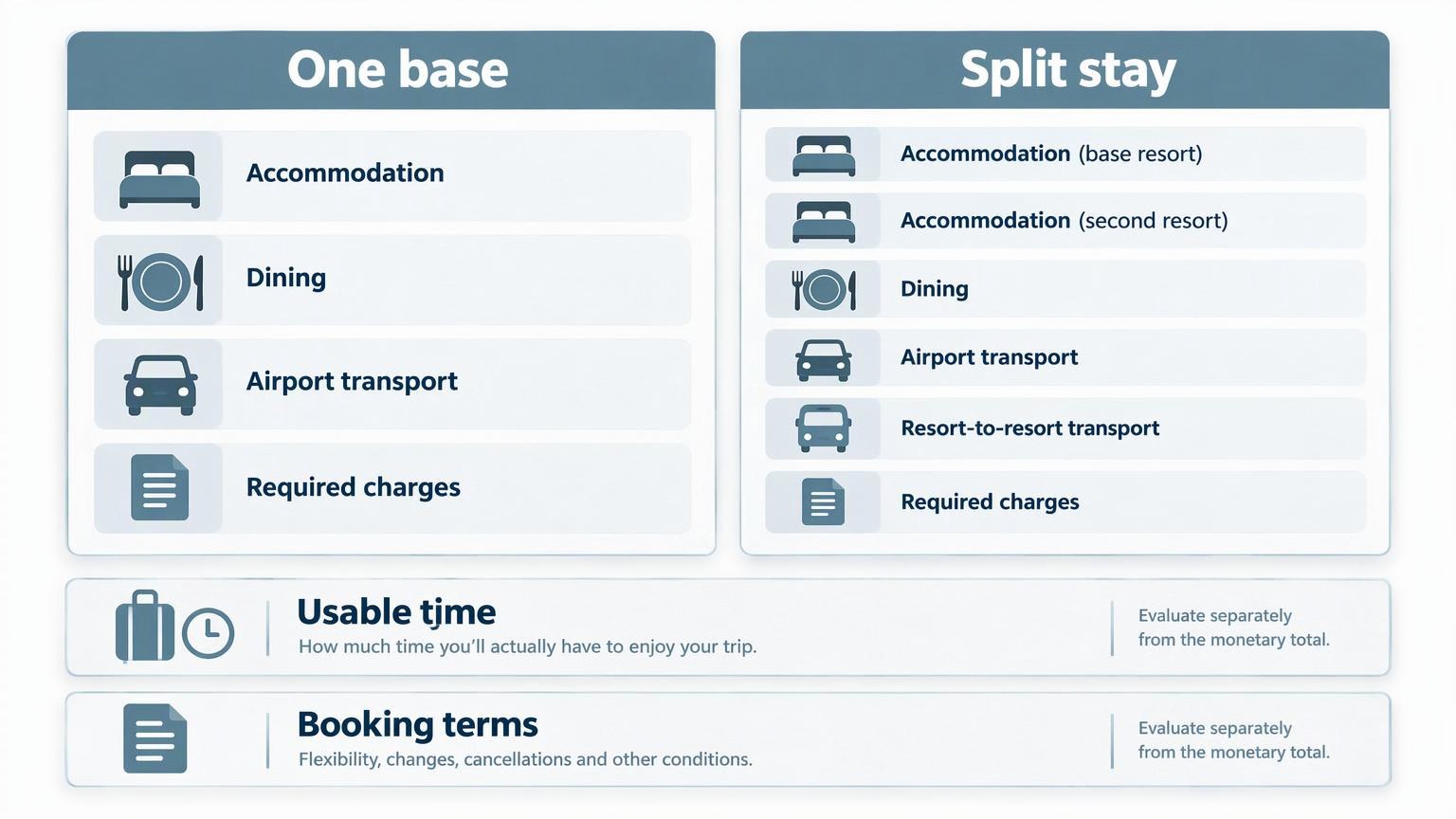
Build the split total from both accommodation quotes, required taxes and charges, transportation between stays, and any changed airport transportation. Add meals outside the included plans and any extra transport or baggage costs created by the itinerary. Count an expense once, but do not leave it out because it belongs to a different reservation.
All-inclusive resort vacation packages in Mexico also need an inclusion comparison. A meal plan has value only during the periods when you can access it and actually expect to use it. Our guide to what an all-inclusive stay includes helps separate the core meal plan from extras that need their own budget.
Use a total-price worksheet
- Single-base total: accommodation, required charges, planned meals and extras, and airport transportation.
- Split-stay total: both accommodation bookings, required charges, all transportation legs, and meals or extras outside either plan.
- Difference in usable time: packing, checkout, transportation, waiting for access, and settling into the next room.
- Difference in terms: cancellation deadlines, refundable amounts, and any conditions attached to each quoted offer.
Keep money and time as separate results. You do not need to assign an invented dollar value to a lost afternoon to recognize that it matters. A split can be financially attractive and still be the wrong choice for a vacation centered on uninterrupted rest.
Compare bookable offers on equivalent terms
A refundable single-base stay and a nonrefundable split are different products. Record that distinction beside the totals rather than calling the lower figure the better deal.
Likewise, compare the same room occupancy and meal-plan category where possible. If you deliberately upgrade the final portion, describe it as a change in experience, not a like-for-like saving.
Match separately confirmed nights before committing
A proposed itinerary is not complete until each stay has its own confirmed dates and room details. Finding availability for the first property does not establish availability for the second. This matters most when your preferred dates or room requirements leave little flexibility.
Write the first stay's arrival and departure dates beside the next stay's arrival and departure dates. A departure and arrival on the same calendar date can connect the overnight reservations correctly while still leaving a daytime gap without a room.
Also distinguish a quote from a confirmation. An available rate viewed during planning does not mean the room will remain available while you complete a different booking. Before paying, know which part of the trip would be difficult to replace if the other part became unavailable.
Check the room and guest details on each reservation
Match guest names, occupancy, room category, bedding needs, and the selected meal plan separately. A suitable arrangement at the first resort does not establish the same arrangement at the next one.
If an offer has a minimum-stay condition, test the allocated portion against that condition. Do not assume a full-vacation promotion applies when you shorten the stay to make room for another hotel.
Avoid an accidental empty night
Every overnight in the itinerary needs an accommodation booking unless you intentionally plan otherwise. Read dates as actual arrivals and departures, not as an informal count of vacation days.
Once the reservations are confirmed, retain the confirmation references and the terms attached to each. A personal itinerary is useful for organizing the trip, but it does not replace the individual booking records.
Plan the move as part of the vacation
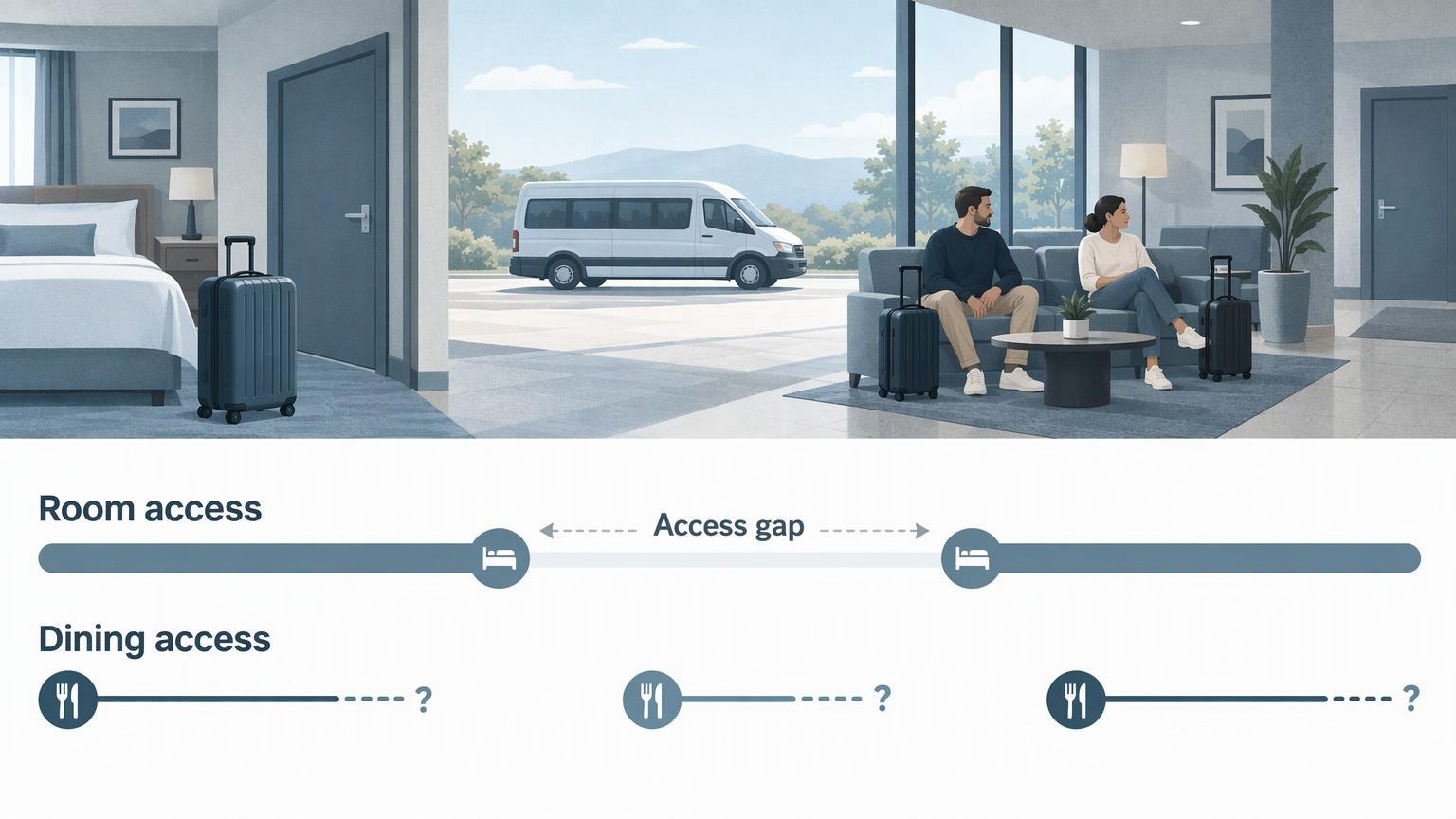
A resort move includes more than transportation. You need to pack, clear the room, complete checkout, collect luggage, travel, handle arrival formalities, and regain access to the things you need. Even a straightforward transfer can interrupt the day if room access does not line up.
Build the transition around confirmed checkout and check-in times. Ask separately when the first meal plan ends and when the next property's included services begin. Room access, luggage storage, and dining access are different questions; permission for one does not establish the others.
Do not schedule a paid activity immediately after the move unless its timing remains workable with the confirmed arrangements. Keeping that day flexible protects the experience you are moving to enjoy.
Make the access gap workable
If you cannot enter the next room on arrival, the important question is what you can comfortably do while waiting. Confirm whether luggage storage is available and whether you may use dining or other facilities before room access begins.
For travelers who need a rest period, accessible changing space, or reliable access to medication, an uncertain gap can outweigh the appeal of the second resort. Keep essential items with you, and do not base the plan on unconfirmed early check-in or late checkout.
Get a transfer quote for the actual properties
Use exact pickup and drop-off properties, guest count, luggage needs, and the intended departure time when requesting transportation. Confirm whether the quote covers the resort-to-resort journey rather than assuming an airport transfer can be repurposed.
A quoted journey time is only part of the day's schedule. Add the hotel procedures and access gap around it, then decide whether the remaining day still supports your vacation plans.
Understand which booking depends on the others
The risk is not simply having separate reservations. Straightforward hotel bookings can be easy to manage independently. The harder issue is whether changing one component makes the others unusable or expensive to change.
For example, if the second stay is the main reason for the trip, losing it changes the value of the first stay and the flights. Conversely, if either resort would work for the entire vacation, you may have a more practical fallback, subject to availability and booking terms.
Record cancellation deadlines and the applicable time zones for each reservation. Read flight and transportation conditions independently from hotel conditions. Unless the booking terms explicitly connect the components, do not assume canceling one cancels or refunds the rest.
Before committing to restrictive terms, decide what you would do if the other stay could not be booked: keep the first base, choose another property, change dates, or stop the purchase. That decision is easier before money is tied to the itinerary.
Work through a Cabo split-stay example
Say you want independent dinners during the first part of your vacation and an all-inclusive finish with most meals on property. You are comparing one Cabo all-inclusive base with a room-only opening stay followed by a Cabo all-inclusive reservation.
The split has a clear purpose: it aligns the meal plans with how you want to spend each portion. But first compare it against keeping one room-only base and buying the meals you want. Avoiding a move may be worth more than having the final meals prepaid.
Next, inspect the transition. If room access at the second property begins after you arrive, and you need a private space to rest, the move conflicts with your plans unless suitable access is confirmed. If you can comfortably spend the gap without a room and the transportation is arranged, the interruption may be acceptable.
Now compare complete totals and terms. The split is the stronger choice when its dining change is valuable to you, the confirmed nights fit, and the move does not consume the part of the stay you most wanted. One Cabo base is stronger when you expect to spend most days similarly or the second property adds little beyond a different address.
Finally, apply Cabo's beach test to both options. If ocean swimming is essential, verify that need before choosing either base. Moving between properties does not fix an unsuitable beach plan unless the next property's actual access meets your needs.
Use the Cabo portion as a comparison, not a package promise
Once the split has a clear purpose, price the Cabo portion for its exact dates and compare it with a Cabo stay covering the full vacation. Keep occupancy and room requirements consistent, then examine any deliberate difference in meal plan or room category.
At Travel Elite Pass, we provide one search across hotels, flights, cars, and activities, with member-only rates revealed after login. Our all-inclusive focus and Exclusive Resort Collection are relevant to comparing the resort portion; they do not establish a coordinated multi-resort package or included resort-to-resort transportation.
Bookings are processed through our platform's own checkout. Cancellation and refund terms vary by the supplying hotel or airline and are shown at checkout for each booking. Compare the final total and those terms before treating a member rate as the better option.
The useful result is a defensible choice: either the Cabo base gives you enough of what you want, or the second stay adds something worth the interruption. You do not need a split itinerary simply because you can assemble one.
Frequently Asked Questions
Should couples put the more expensive resort at the end?
Put the stay you most want to enjoy where the itinerary gives it enough usable time, rather than automatically saving it for last. A final upgrade can lose value if you arrive late or leave early. Compare arrival access and departure plans with the meals and experiences that justify paying more.
Is there a minimum trip length that makes splitting worthwhile?
There is no universal minimum that makes a split worthwhile. The better test is how much uninterrupted time remains at each property after arrival, departure, and the move. If one portion leaves little opportunity to enjoy its main appeal, keep one base or change the allocation before booking.
Can I split a vacation with children?
A family split stay can work when both room arrangements suit your party and the transition supports your children's routine. Consider rest, meals, luggage, and access to essential items during the room gap. A second resort needs a meaningful family benefit to justify packing up and establishing that routine again.
Does buying airfare with a resort mean the inter-resort move is included?
No, you should not infer resort-to-resort transportation from an airfare-and-hotel offer. Read the listed transportation inclusions and the exact pickup and drop-off points. Airport transportation and a journey between hotels solve different needs, so obtain a separate confirmed arrangement if that leg is not expressly included.
Should I buy travel insurance for separate resort stays?
Consider coverage based on the financial exposure and disruptions you want protection against, rather than the number of hotel bookings alone. Read the policy's covered events, exclusions, and treatment of separately booked components before purchasing. Do not assume every change of plans qualifies for reimbursement or that every reservation is covered automatically.
Can an AI deal finder coordinate the whole split itinerary?
Do not assume an AI deal finder coordinates reservations, transportation, or access between properties. We have an AI Deal Finder, but that does not establish a multi-resort itinerary service. Use search results to compare options, then verify the booking details and dependencies of each stay before committing to the trip.