

BUDGET-CONSCIOUS TRAVELERS
Decide whether you need an affordable room within reach or a planned vacation before comparing hotel and resort bookings.
An economic hotel near me search can mean that you need somewhere affordable to sleep tonight. It can also mean that you want an inexpensive break but have not chosen where to go. Those needs require different searches.
Does the room support a required stop or become the trip?
If you must be somewhere specific, accommodation supports that obligation. A room that makes the next morning manageable is a better candidate than an appealing resort that takes you away from it.
For a vacation, the relationship reverses. You choose a place because you want to spend time there, and the journey becomes part of the plan. The useful comparison is between vacations you can realistically take, not between the cheapest room around you and an unrelated destination.
There is also a middle choice: a local leisure stay. You may want a change of setting without committing to destination travel. That still requires a geographic search, but you can center it on the experience you want rather than an appointment or work site.
Property labels do not decide the search
A hotel provides lodging; a resort generally puts more emphasis on recreation and time spent at the property. Neither label tells you whether the address works for your trip, and a resort is not automatically all-inclusive.
For this decision, the more useful question is whether you are buying a base for something else or choosing the stay as an experience. A basic hotel can be a vacation choice, and a resort can be impractical even when its room rate interests you.
| Search path | What must stay fixed | What you can vary | Main trade-off |
|---|---|---|---|
| Nearby overnight room | Required stop and arrival deadline | Property and acceptable route | Location can limit your affordable options |
| Local leisure stay | Practical travel area and time away | Setting, amenities and dates | A limited search area may narrow the experiences available |
| Destination resort stay | Vacation purpose and overall budget | Destination, dates and accommodation | The journey uses time and money beyond the room booking |
How do you define a useful nearby search area?
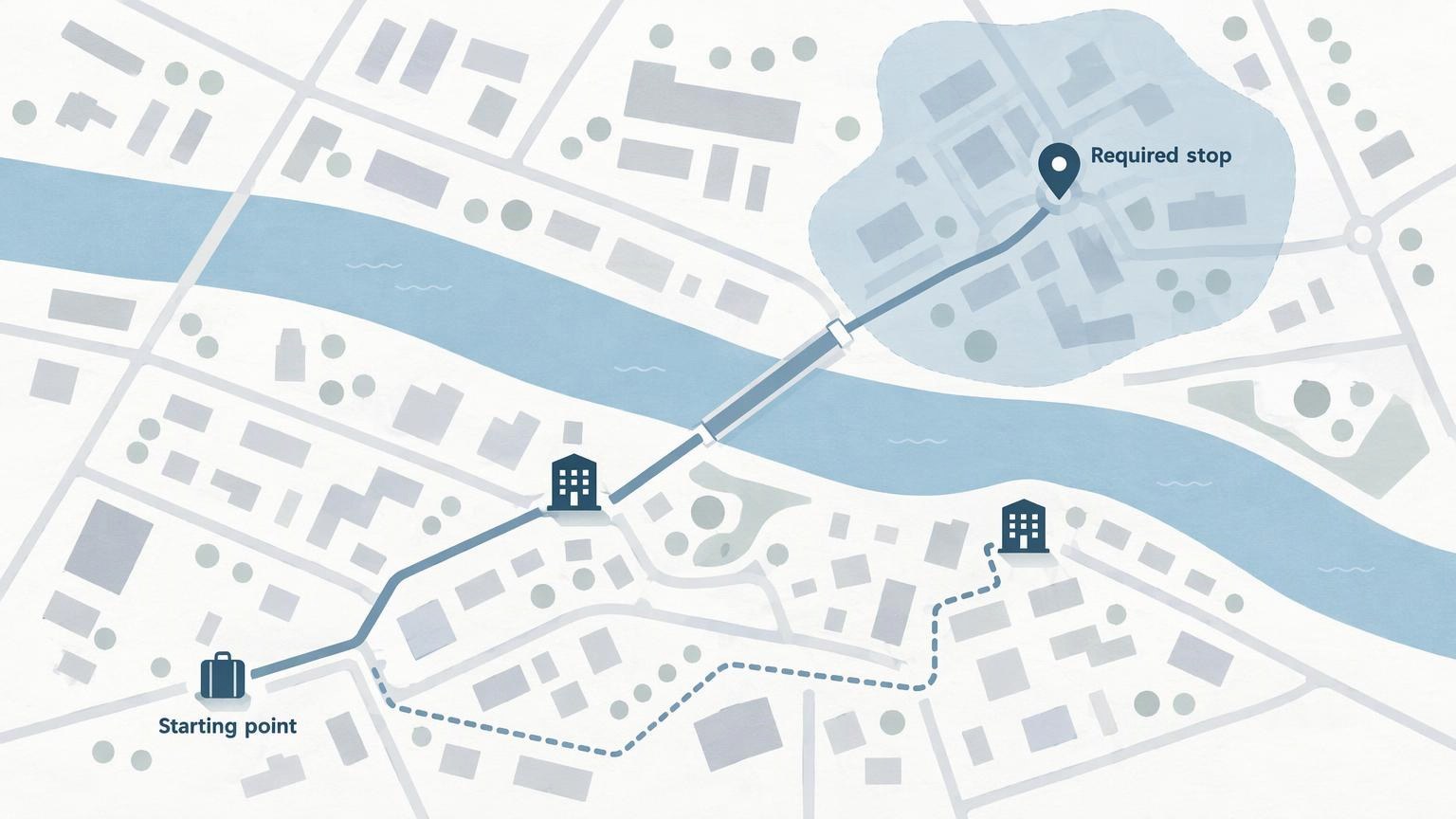
Center the search on the place you need to reach, which may not be where your phone is now. If tomorrow's obligation is elsewhere, searching around your current location can produce affordable rooms in the wrong area.
Enter the correct dates and guest count before sorting cheap hotels by price. Then use the map to judge location, rather than assuming that a search result's order reflects the best route for you.
A useful travel radius is the area you can reach with your actual transportation and schedule. A straight-line distance does not describe road access, a transit connection or the route back to your required stop.
Evaluate the trip in both directions
For an overnight obligation, consider the route to the property and the route to your next stop. A hotel may be convenient for arrival but awkward for departure, especially if you will leave at a different time of day.
If you are not driving, evaluate the transportation you will actually use. Do not treat a driving estimate as a useful measure of walking or transit access. Keep enough room in the plan for getting ready and reaching the entrance, rather than planning only to arrive at the address.
Expand only when the wider area still works
Widening the map gives you more places to investigate, but it does not establish better value. Keep a farther property only if its route fits your deadline and any additional transportation cost is acceptable.
If you are looking for hotels or motels near you because you need to stop driving, expanding the search defeats the purpose once it asks you to continue farther than you can comfortably manage. In that case, reachability is an eligibility requirement, not a benefit to trade away for amenities.
Does your available time leave room for destination travel?
Separate the time until you need a room from the total time you can spend away. Needing accommodation soon favors a search focused on arrival. Having time off makes a destination possible, but only if the journey leaves enough time for the stay you want.
For a destination vacation, build the timeline from leaving home through returning home. Include the steps your route requires, such as reaching a departure point, waiting, traveling and transferring to the accommodation.
Then look at usable time at the property. A stay with late arrival and early departure may leave less leisure time than the number of booked nights suggests. Compare the itinerary, not simply the reservation length.
Treat uncertain arrival as a separate issue
If arrival depends on a delayed journey or a work schedule you cannot control, the open question is whether you can access the room when you arrive. Establish the property's applicable arrival arrangements before relying on the booking.
A prepaid reservation and a feasible arrival plan are different things. Likewise, choosing a refundable rate does not by itself resolve room access after a late arrival. Match each uncertainty to the term or arrangement that actually addresses it.
Leave destination planning for a trip that can absorb it
A resort vacation can be worth the journey when spending time at the destination is the goal. It is a poor substitute for a nearby overnight room when travel would interfere with the obligation that created the need.
The downside of keeping the search local is that you may not find the setting you imagined. The downside of switching to a destination is the extra journey. Choose which compromise fits your purpose rather than assuming that a vacation experience is always the better purchase.
Compare total cost only after the options qualify
Remove options that fail your location or timing needs before comparing prices. Otherwise, an attractive rate can pull the decision toward a booking that cannot do the job.
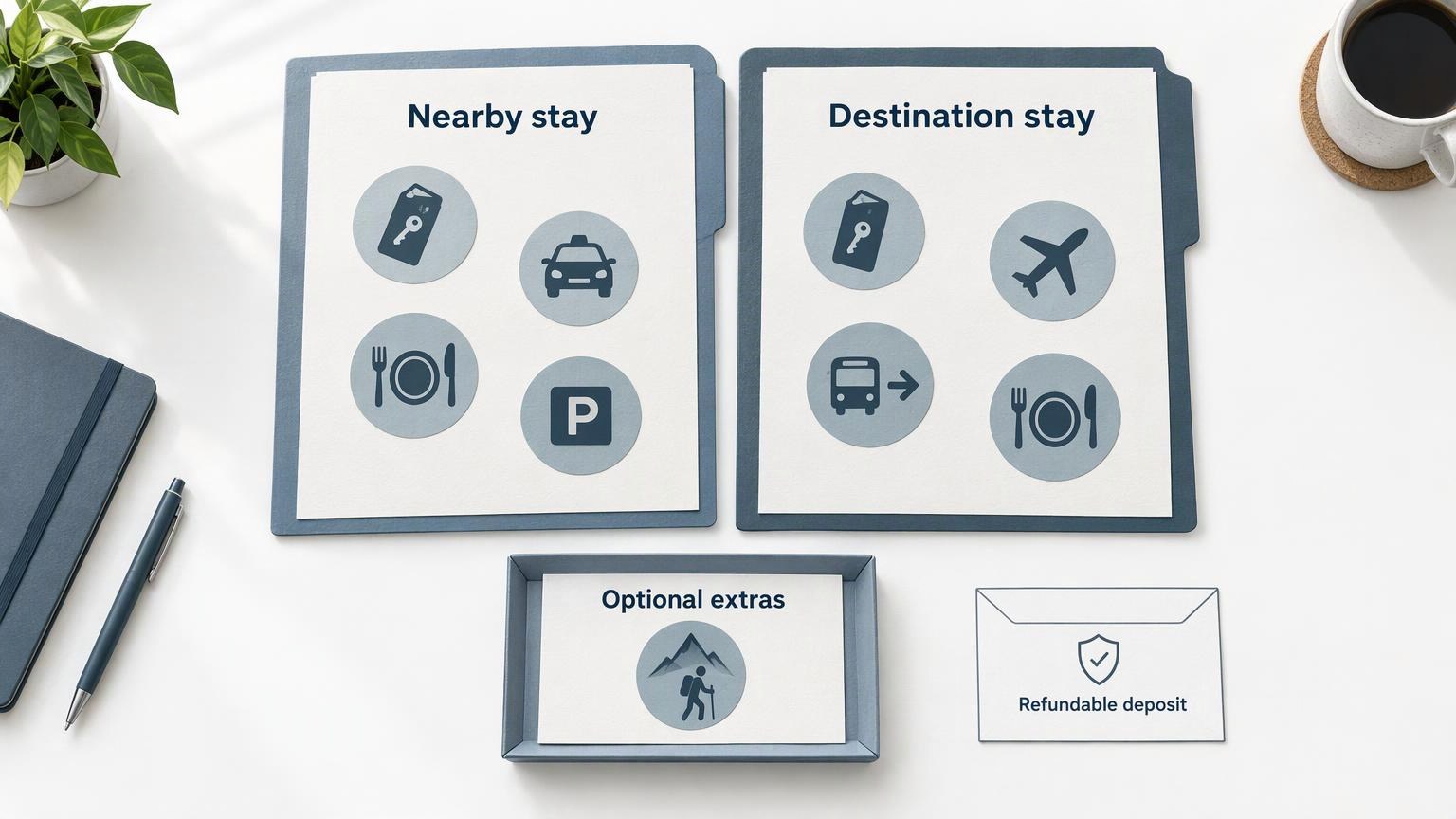
For nearby lodging, compare the full accommodation charge plus the transportation and meals you expect to need. Include applicable parking or other required expenses in your own calculation. Keep refundable deposits separate from expected spending, while accounting for the money you may need available.
For a destination stay, add the journey and any transfers or other expenses needed to make the trip happen. All-inclusive describes a booking's inclusions; it does not establish that every part of your vacation is covered.
Make the comparison like for like
Use the same dates, guest count, room requirements and cancellation needs when comparing accommodation offers. A lower rate for a different room or less flexible booking is a different choice, not proof that an equivalent stay costs less.
Keep optional spending separate so you can see what is essential and what you can remove. This makes the comparison useful without pretending that a nearby overnight stop and a resort vacation provide the same experience.
There is no booking route to assume is cheapest in every case. If you are also deciding where to transact, the guide to booking through a platform versus booking directly addresses that separate choice.
The same budget preference can lead to different bookings
Say you have an early appointment away from home and want an affordable overnight room. You are comparing a basic hotel on a workable route, a cheaper room that requires a less convenient journey, and a resort stay that would turn the outing into a break.
The basic hotel is the leading choice if it lets you arrive, sleep and reach the appointment without stretching the schedule. The farther room stays in consideration only if the complete route and transportation spending still work. The resort is not a substitute if it takes you away from the appointment.
Now change the purpose. You have time off, no required stop and want to spend the break enjoying the accommodation. Your location is no longer the center of the decision, so a destination resort becomes a relevant option.
Compare it with a local leisure stay using the total time away, usable leisure time and full spending. If the destination journey would consume too much of your break, the local stay may fit better. If you can make the journey comfortably and want the destination experience, resort planning is the appropriate next step.
The budget preference did not change. What changed was whether geography was a requirement or a choice. That distinction should change the search before it changes the booking.
When does Travel Elite Pass fit this decision?
If you need a room tied to a specific address tonight, keep working with a location-based search and current availability. A destination collection does not answer whether accommodation meets your immediate route and arrival needs.
Once you decide that a destination vacation fits, our all-inclusive focus becomes relevant. At Travel Elite Pass, we have an Exclusive Resort Collection, an AI Deal Finder and member-only rates revealed after login. Our platform brings hotels, flights, cars and activities into one search.
That lets you investigate the accommodation alongside the travel components your plan needs. Read about comparing travel options in one search if you are moving from a room-only decision to planning a complete trip.
A member rate is still an offer to compare, not a guaranteed lowest price. Use equivalent dates and booking terms, then evaluate total trip spending. We process bookings through our own checkout; cancellation and refund terms vary by the supplying hotel or airline and appear at checkout for each booking.
If destination travel is the right path, visit Travel Elite Pass to browse all-inclusive destinations. Start with where and when you can realistically travel, then compare the stay and the journey together.
Frequently Asked Questions
What should I do if the map is using the wrong location?
Enter the address or area you actually need instead of relying on automatic location detection. Confirm the map is centered correctly, then apply your dates and guest count. If you are planning accommodation for a future stop, your current device location should not define the search.
Can I book an overnight room after midnight?
Establish the intended stay date and arrival arrangements with the property before paying. After midnight, the date you see in a search may not match the overnight stay you mean. Explain when you expect to arrive and leave so the reservation covers the room access you need.
What if I need a hotel for a month rather than a vacation?
Treat a month-long stay as a separate lodging decision, not an extended resort search. Request a quote for the complete period and compare the terms, room facilities and recurring expenses that matter to daily life. Use current offers for your actual dates rather than assuming a nightly rate applies throughout the month.
Can a nearby search establish that a hotel is suitable for my accessibility needs?
No, a nearby address does not establish that a room or property meets your accessibility needs. Identify the room setup and access details that matter to you, then verify them for the accommodation you intend to reserve. Location and accessibility are separate requirements, and both need to work.
Will an AI deal finder know where I need to stay tonight?
Do not assume that an AI deal finder has your location, deadline or room requirements. Our platform has an AI Deal Finder, but that does not establish automatic location-aware matching or immediate local availability. Use explicit trip details and evaluate whether each result meets the purpose of your stay.
Does member-only pricing mean I should stop comparing offers?
No, member-only pricing is another rate to evaluate against equivalent offers. Compare the room, dates, guest count, inclusions and cancellation terms, along with total spending. Our rates are revealed after login, but membership pricing alone does not establish that an offer is the lowest-cost choice for your trip.